
The focus at the beginning of the year was to uplift the apiary to enable it to be a useful training resource to both new and existing MBKA members.
To facilitate this, a number of new protocols were put in place regarding Health and Safety and Biosecurity.
This included safe disposal of smoker fuels, members signing in, everyone using disposable gloves and using the foot bath, hive tools being put in washing soda after use and wax collected in a bucket.
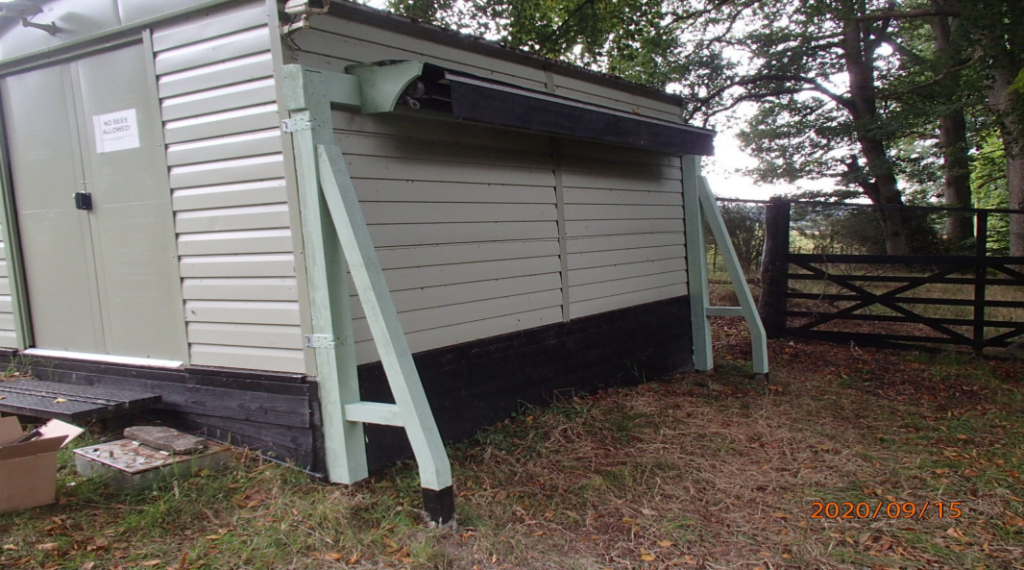
In addition to the new shelving Ian Hubbuck also put in place an awning attached to the bee shed.
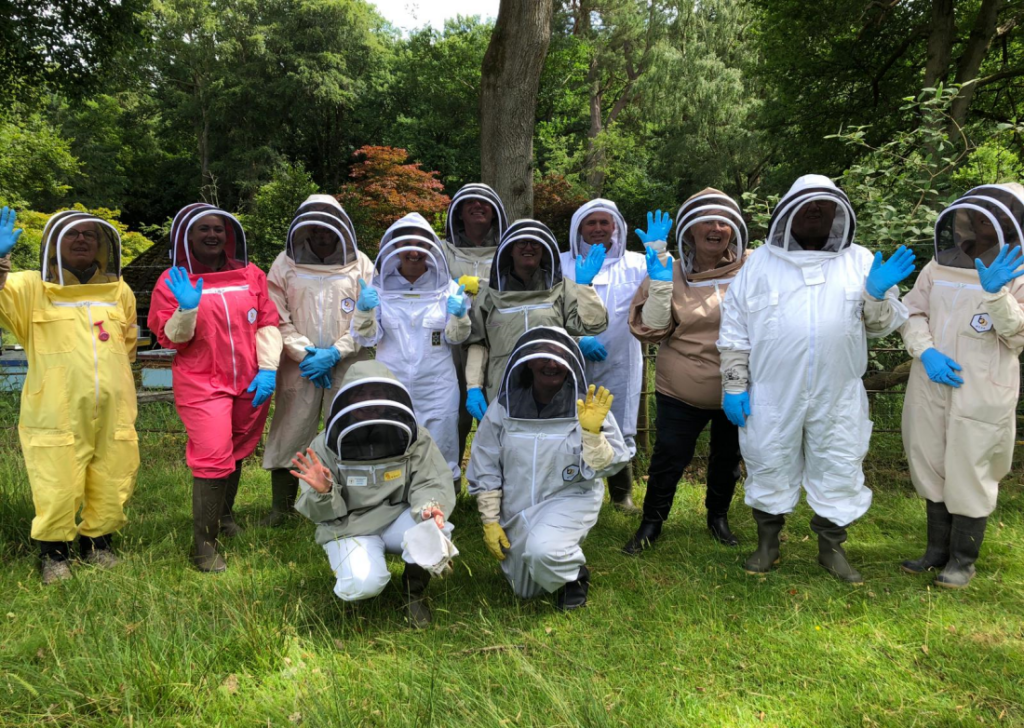
This year’s new members, some of whom are shown opposite have benefitted from the training facility.
The team have attended the apiary each of the Sundays throughout the summer and undertaken supervised sessions to inspect the colonies and give valuable experience in handling the bees, using the five Ted Hooper inspection principles.
In addition to this training a number of spotlight sessions were delivered, being available to all members.
These sessions covered Varroa Treatment, Honey Extraction, Feeding Bees and Preparation for Winter. The apiary ends the year with 10 colonies. No honey was harvested this year, and in fact the bees have needed regular feeding during autumn.
Paul Aslin inspected the apiary during August and was impressed with the improvements made.
A further treatment of MAQS was applied, and a plan is in place to treat the colonies during December with oxalic acid.
The management of the apiary shed has now been handed over, into the capable hands of Joy Sisley who recently undertook a full inventory.
The apiary now has sufficient equipment with only a small number of items required for 2021.
In addition to the national hives, Mal Shears has located within the apiary a Warre and a Kenyan hive.
These will be populated with bees during 2021 and will provide an alternative experience for our members to observe.