What to do if you see one
- Take a photograph if it is safe to do so. A photo or short video makes checking the record much quicker and more accurate.
- Record the exact location. A postcode, What3Words reference, pin drop, or a clear written description is helpful.
- Contact the MBKA Asian Hornet Coordinator first. This applies to both members and the public so sightings can be filtered, checked and escalated consistently.
- Official reporting will then be arranged if needed. You may be asked to submit via the Asian Hornet Watch app or online form, or MBKA may assist with escalation.
For the public
You do not need to be a beekeeper to help. Gardeners, walkers, householders, farmers and people out and about are often the first to spot unusual insects or nest activity.
- Do contact the coordinator first.
- Do include a photo if possible.
- Do keep a safe distance.
- Do not swat, trap or disturb a suspected hornet or nest.
For MBKA members
Please remain alert around apiaries, flowering ivy, forage hotspots, fruit, fallen fruit and sweet liquids, especially from late summer into autumn.
- Contact the coordinator first.
- Keep a record of location, date, time and behaviour.
- Share photographs or video if available.
- Official reporting can then be coordinated quickly and consistently.
How to identify a yellow-legged hornet
Overall appearance
- Mainly dark body.
- Velvety dark brown or black thorax.
- Smoky wings.
- Single broad yellow or orange band towards the rear of the abdomen.
Legs and head
- Legs look dark with yellow ends.
- Head appears darker from above.
- Face appears more orange from the front.
- Queens can be up to about 30 mm; workers up to about 25 mm.
Common confusion species
- Native European hornet.
- Large hoverflies.
- Other wasp mimics.
- If in doubt, report it with a photo rather than guessing.
Identification images
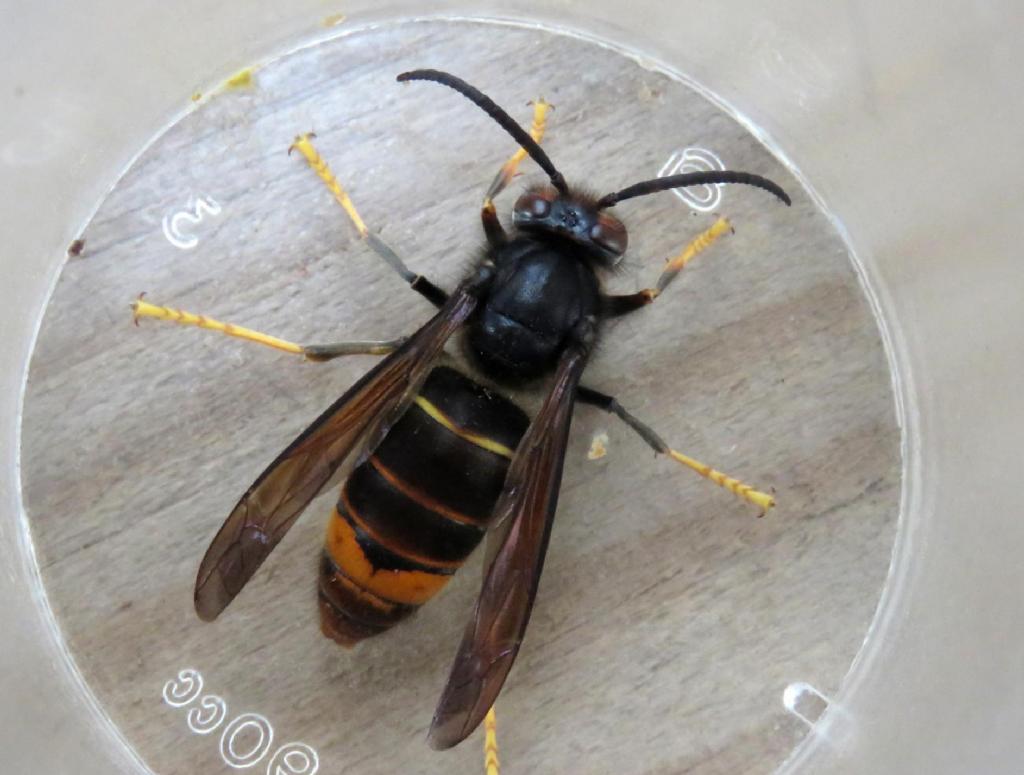
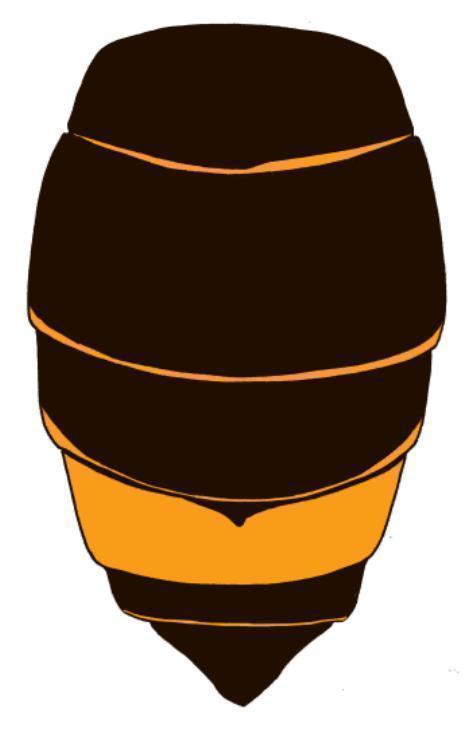
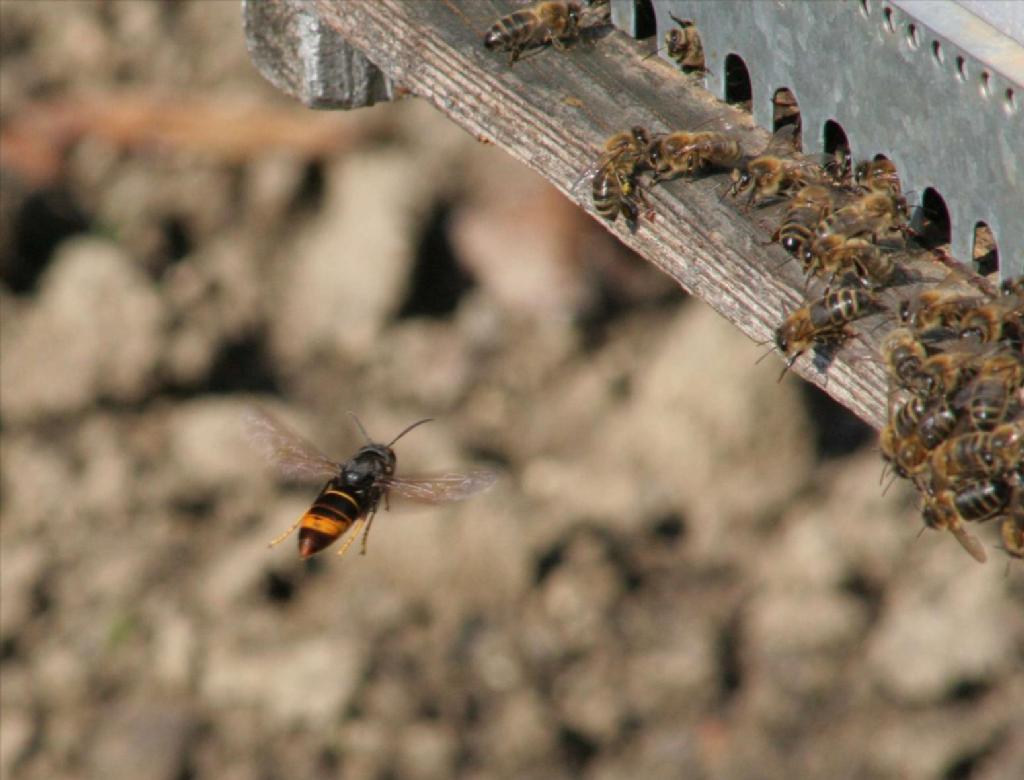
What not to do
- Do not approach or disturb a suspected nest.
- Do not put yourself at risk to get a photograph.
- Do not rely only on social media or WhatsApp groups.
- Do not start ad hoc trapping or nest destruction yourself.
- Do not submit unclear reports without first contacting the coordinator unless the sighting is obviously urgent.
MBKA local contact
All suspected sightings from both the public and members should be sent to the MBKA Asian Hornet Coordinator first so local checks and escalation can be coordinated.
Coordinator: Tim Doyle
Phone: 07515 425601
Suggested information to include: your name, exact location, date and time, what you saw, and any photo or video.
Why rapid reporting matters
The yellow-legged hornet is an invasive non-native predator of insects, including honey bees and other pollinators. UK surveillance and eradication work has so far prevented it from becoming established, but that depends on quick reporting and credible evidence from the public and beekeepers.
MBKA is coordinating local first contact so suspected sightings can be assessed quickly, duplication reduced, and official escalation handled consistently where required.
Official reporting route
Once a sighting has been checked, official reporting can be completed using the Asian Hornet Watch app or the online reporting form where appropriate.